The AI Landscape in 2026
March 27, 2026
The AI Landscape in 2026
In the rapidly evolving world of artificial intelligence, not all generative models are built the same. Some excel at conversation and creative tasks, others at research or coding, and still others at real-time insights. Let’s break down the big players.1. Google Gemini – The Multimodal Powerhouse
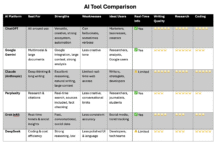
Google’s AI suite, Gemini, is focused on multimodal capabilities and integration with the Google ecosystem. It can handle text, images, audio and even increasingly large contexts — with pushes toward multi-million token windows — making it ideal for large document analysis and research workflows. It also benefits from real-time web access via Google Search. According to various evaluations, Gemini holds strong in benchmarks, particularly in reasoning and analytics, and continues gaining market presence. Strengths: Large context, excellent multimodal support, deep integration with Google tools Limitations: Sometimes less creative or personable in output than others2. OpenAI’s ChatGPT – The Generalist Favorite
ChatGPT remains the most widely used and familiar tool in this space. Built on the GPT-5.x family, it’s a versatile all-around assistant: great for writing, brainstorming, coding, and conversational tasks. Its multimodal abilities (including DALL·E for image generation and vision inputs) set it apart for creative work. It also supports custom workflows through “Custom GPTs,” plug-ins, and agents that automate tasks. Strengths: Adaptable, conversational, creative, extensive ecosystem Limitations: Some hallucination concerns, and web data may lag without browsing extensions3. Anthropic Claude – Analyst and Writer’s Choice
Claude specializes in deep comprehension and high-quality output, particularly for tasks requiring careful reasoning, long documents, and structured responses. Recent benchmarks suggest Claude leads in complex analytical tasks and coding thoroughness. Its tone and safety alignment make it a go-to for professional and academic use. Strengths: Strong reasoning, long-context tasks, thoughtful answers Limitations: Can be verbose or overly conservative in style4. Perplexity – The Research-Driven Answer Engine
Unlike typical chatbots, Perplexity AI functions as an AI-powered search and answer engine, combining real-time web search with LLM summaries and citations. It’s particularly strong for research, fact-checking, and academic work where verification and source attribution matter most. Users can also run Perplexity Pro for enhanced capabilities and document searches. Strengths: Citation-focused, up-to-date web access, great for research Limitations: Less ideal for creative content generation or fluid conversation5. xAI Grok – Real-Time Insights & Social Trends
Grok, from Elon Musk’s xAI, shines in real-time data retrieval and trending topics, often integrating data from X (formerly Twitter). It’s built for lively conversational tone and quick info, including capturing social sentiment and current events. That said, its safety performance and moderation have been questioned in independent evaluations. Strengths: Real-time search, trend insights, casual style Limitations: Less predictable accuracy and moderation concerns6. DeepSeek – Open-Source Challenger from China
DeepSeek is a Chinese AI platform that has gained attention for its open-source LLMs and affordable, efficient training approach. Its models like DeepSeek-R1 and V3 deliver solid reasoning and coding performance while lowering resource costs. It’s especially intriguing for developers and research labs who want open access to model internals. However, geopolitical controversies and data concerns have emerged around DeepSeek’s methods and safety posture. Strengths: Open-source, cost-effective, competitive reasoning Limitations: Less polished in general language fluency and safety alignment; regulatory worries existChoosing the Right Tool
Each of these AIs has its sweet spot:- ChatGPT for breadth and creativity
- Gemini for multimodal and large context work
- Claude for deep analysis
- Perplexity foraccurateresearch with citations
- Grok for real-time trends and social data
- DeepSeek for open-source flexibility and cost-efficiency